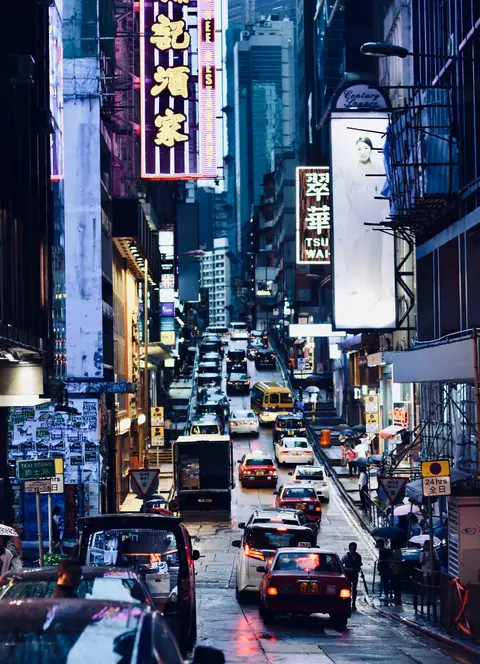
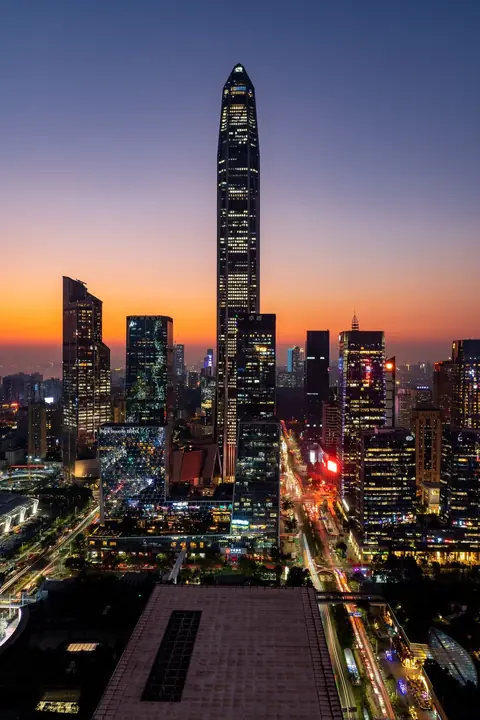
The whole territory is barely 30 km² — smaller than most airports’ land area — yet it packs a UNESCO World Heritage old town, a food culture found nowhere else, and a resort strip that out-glitters Las Vegas. Treat it as a full day (or a lazy overnight) rather than a rushed half-day, and it becomes many guests’ surprise favourite.
Top things to do in Macau
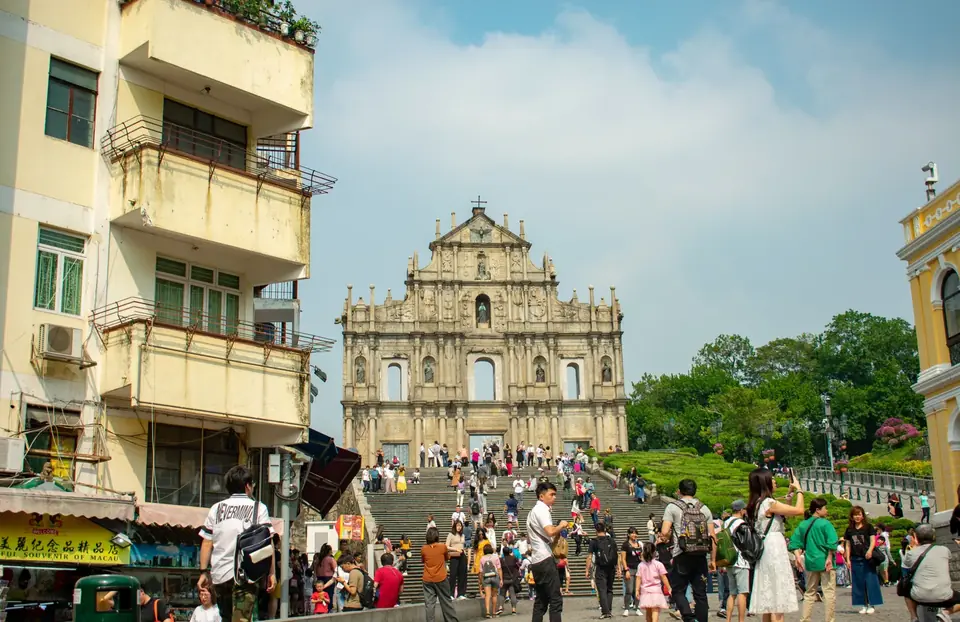
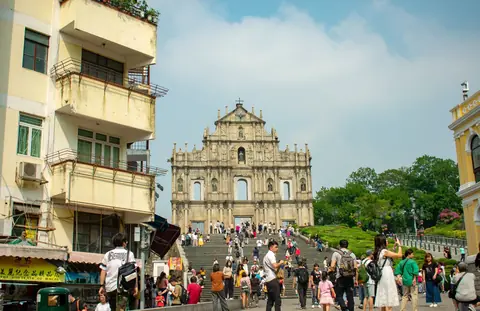
Ruins of St. Paul’s
The stone façade of a 17th-century Jesuit cathedral that burned down in 1835, standing alone at the top of its grand staircase — Macau’s signature sight. Come before 10:00 or near closing to beat the tour groups, and climb the fortress hill next door (Monte Fort) for the free view over the old town with casino towers behind it: Macau’s whole story in one frame.
Senado Square & the old town walk
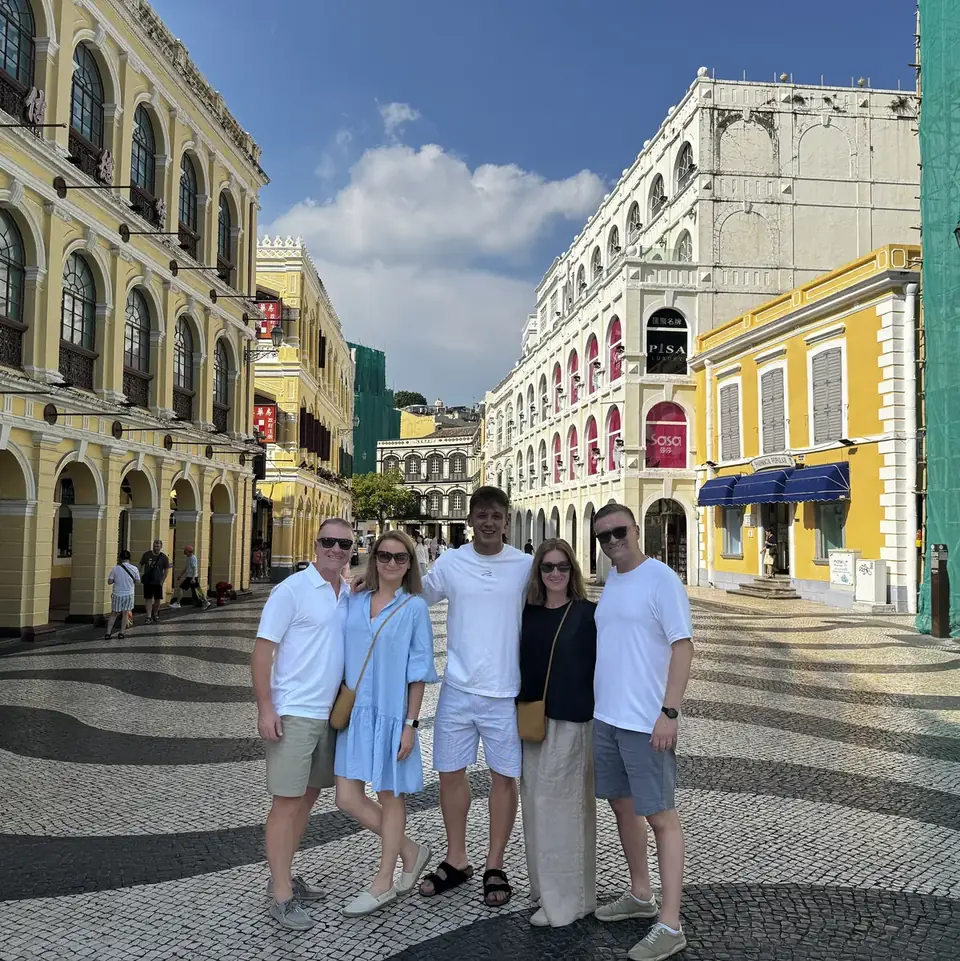
Wavy black-and-white Portuguese paving, pastel neoclassical facades and narrow lanes that could be Lisbon until you smell the almond cookies. The classic walk — Senado Square up Rua de São Paulo to the Ruins — takes 20 minutes without stops; give it two hours and detour into the side streets, St. Dominic’s Church and the covered market.
A-Ma Temple
The seafarers’ temple that predates the Portuguese and probably gave Macau its name (“A-Ma-Gau”, bay of A-Ma). Incense coils hang over courtyards that climb the hillside; it’s the calm counterweight to the old town crowds, ten minutes away by taxi.
Taipa Village
Narrow lanes of shophouses squeezed between the Cotai resorts and old Taipa — this is where you eat: Macanese minchi and African chicken, pork-chop buns, and the endless duel of egg-tart bakeries. The pastel colonial houses along the Taipa Houses-Museum waterfront make the best photo stop nobody plans for.
The Cotai Strip, casinos & resorts
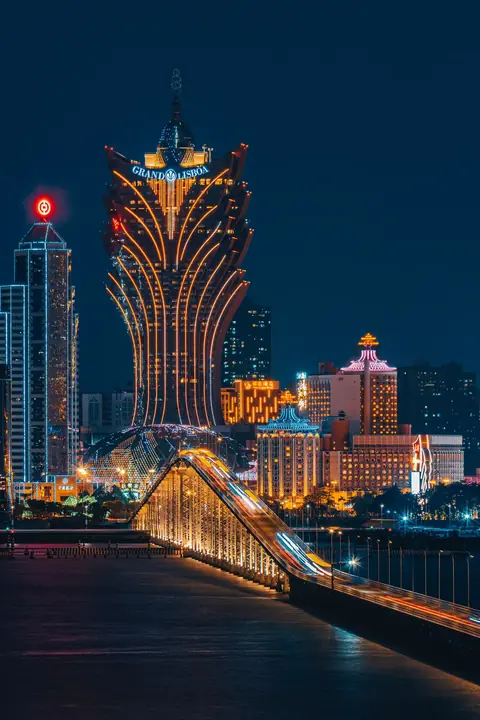
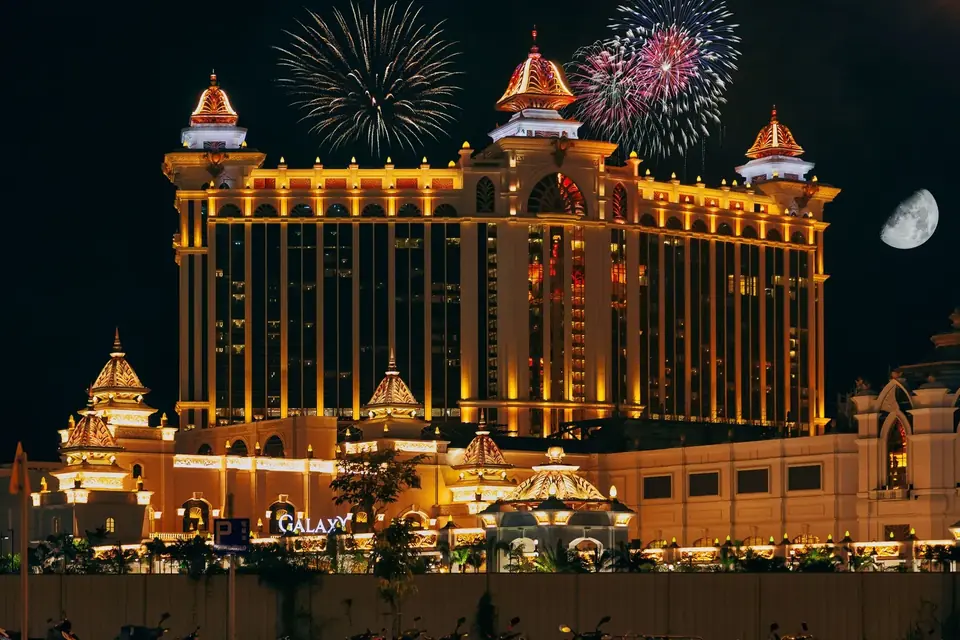
Macau’s casinos and integrated resorts are a major reason to visit. Walk through the Venetian’s canals, the Londoner’s theatrical skyline and the Galaxy’s huge resort complex, then explore the gaming floors, shows, restaurants and evening lights. You can enjoy Cotai without gambling, but the scale and spectacle of its casinos are an essential part of modern Macau.
Egg tarts, properly
The Portuguese-style pastel de nata was perfected here with a caramelised, almost burnt top. Eat them warm from the oven — Lord Stow’s in Coloane started the cult, Margaret’s Café near the Grand Lisboa carries it on — and budget for a second round.
A simple 1-day itinerary
Staying overnight? Resort rooms are large and, midweek, surprisingly good value — and the old town at 8 a.m., before the day-trippers land, is a different (better) city.
Coloane — the quiet south
Most day-trippers never make it past Cotai, which is exactly why you should. Coloane village is a sleepy Portuguese-Cantonese fishing settlement of yellow chapels, drying laundry and the original Lord Stow’s bakery — egg tarts at the source, eaten on the square. Hac Sa beach, with its naturally black sand, and the coastal trails above it round out the least casino-like afternoon Macau offers. Taxis and buses reach it in 15 minutes from the Strip; the contrast is the point.
A little history helps
Portugal administered Macau from the 1550s until 1999 — longer than any other European colony in Asia — and the handover deal, like Hong Kong’s, preserved a separate system for 50 years. That’s why Macau keeps its own currency, immigration and laws, why street signs are bilingual Portuguese-Chinese, and why the old town feels genuinely Iberian rather than themed. The Macanese community — mixed Portuguese-Cantonese families with their own creole cuisine — is small now, but its food and festivals are the territory’s soul beyond the baccarat tables.
What to eat
Macanese cuisine is the world’s first fusion food — Portuguese technique meeting Cantonese ingredients via Goa and Malacca. Beyond egg tarts: minchi (minced beef with potatoes and a fried egg), African chicken in peri-peri-ish sauce, pork-chop buns eaten standing up, serradura pudding, and proper Portuguese wine lists at old-town restaurants. It’s a day trip worth planning around meals.
Getting there & around
From Hong Kong, ferries reach Macau in about an hour (frequent departures from Sheung Wan and TST), or ride a coach across the 55 km Hong Kong–Zhuhai–Macau Bridge — the world’s longest sea crossing. From Shenzhen, cross at Zhuhai’s Gongbei border (or take the ferry from Shekou) and walk into Macau. Inside Macau, free casino shuttles connect the ferry terminals, border and Cotai — the open secret of getting around — with taxis and buses filling the gaps. Macau works beautifully as the middle act of the Hong Kong, Macau & Shenzhen tour.
When to go
Same rhythm as the delta: October–December is dry and comfortable, summer is hot, humid and typhoon-prone. Weekends and mainland holidays triple the crowds in the old town — a midweek visit is a different experience. The Grand Prix (November) and big fight/concert weekends spike hotel prices sharply.
Practicalities
Visa: most nationalities enter Macau visa-free; it has its own immigration, separate from both Hong Kong and mainland China — so a Hong Kong–Macau–Shenzhen loop means three border checks. Money: the Macanese pataca is official, but Hong Kong dollars are accepted 1:1 almost everywhere; cards work widely in resorts, cash still helps in old-town bakeries. Language: Cantonese and Portuguese are official; English is common in tourist areas and resorts. Internet: the open internet works normally, as in Hong Kong — mainland restrictions start only across the border in Zhuhai.