In this guideShow
Guangzhou — historically Canton — has traded with the world for two millennia, and it shows: colonial riverbanks, temple courtyards, wet markets and one of the most serious food cultures on the planet. It gets a fraction of Hong Kong’s tourists, which is precisely its charm.
Top things to do in Guangzhou
Canton Tower
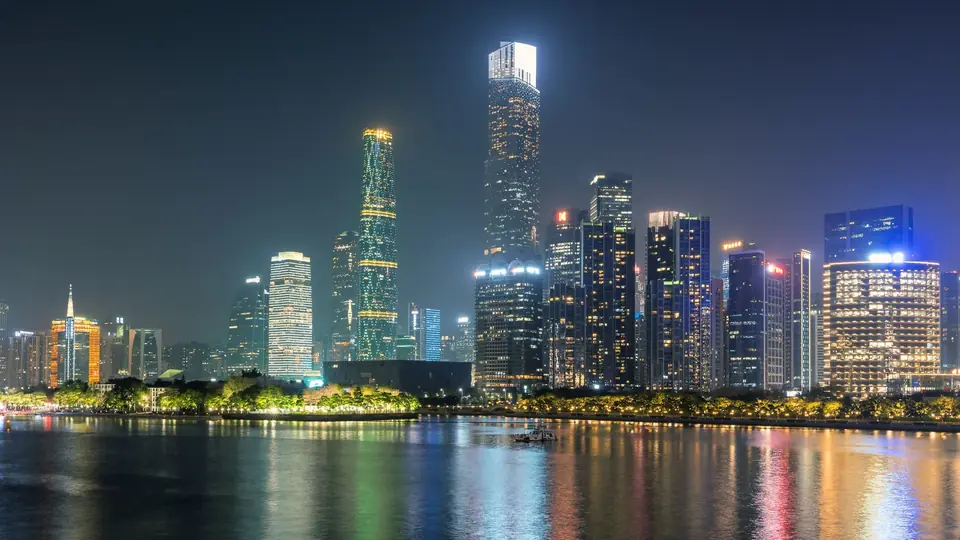
The 600 m twisting landmark that defines the skyline. You can pay to go up (several deck options; the outdoor “bubble tram” Ferris wheel at the top is the memorable one), but honestly the better experience is free: watch the tower light up from the opposite bank at Huacheng Square or from a river cruise. Sunset to full dark is the window.
Shamian Island
A leafy former European concession where 19th-century trading houses line traffic-free boulevards. It’s a slow morning done right — colonnades, banyan trees, wedding photographers and riverside cafés. Combine it with Qingping Market next door for the full contrast: old Europe on one side of the canal, traditional Chinese medicine stalls on the other.
Yongqingfang & the Xiguan old town
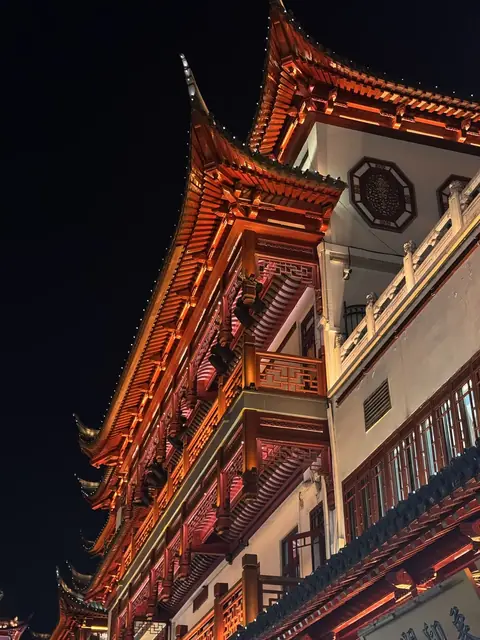
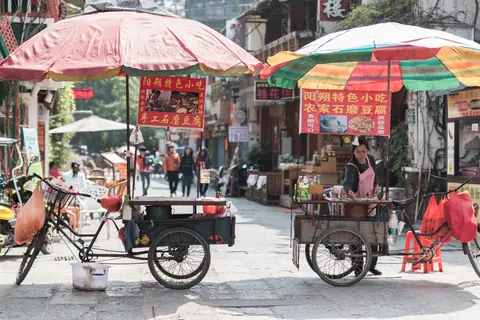
Restored lanes of grey-brick houses in the Liwan district, now home to tea houses, craft shops and street food — with genuinely old streets a block away in every direction. This is the best area to wander with no plan. Come hungry: the surrounding Xiguan neighbourhood is the cradle of Cantonese snacks.
Chen Clan Ancestral Hall
The finest Cantonese folk architecture you’ll see — a 19th-century academy whose every roof ridge crawls with ceramic operas, dragons and fish. The folk-art museum inside (ivory, embroidery, brick carving) rewards an unhurried hour. Metro: Chen Clan Academy station, directly below.
Yuexiu Park & the Five Rams
Guangzhou’s green heart: lakes, banyan-shaded paths, the Ming-era city wall and the Five Rams statue of the city’s founding legend. Locals fill it with tai chi and choir practice at dawn — worth an early start if you’re jet-lagged anyway.
A Pearl River night cruise
The classic finale: an hour on the water as both banks and the Canton Tower run their light shows. Boats leave from several piers near Tianzi and Dashatou; buy the basic ticket — the view is the same without the buffet.
Beyond the highlights
With more time: Baiyun Mountain (“White Cloud Mountain”) is the city’s green lung — cable car up, skyline views, tea pavilions. The twin-spired Sacred Heart Cathedral, built entirely of granite in the 1880s, anchors a lively old quarter of dried-seafood streets. Redtory and the TIT creative parks are Guangzhou’s answer to Shenzhen’s OCT-LOFT — art spaces in old canneries and textile mills. And under the Beijing Road shopping street, glass panels reveal thousand-year-old road surfaces from the Song and Ming dynasties — the city’s age, literally underfoot.
Day trips from Guangzhou
Foshan, 30 minutes away by metro or rail, is the home of Cantonese kung fu — the Ancestral Temple stages lion-dance and martial-arts shows, and the Wong Fei-hung and Ip Man halls cover the legends. Further out, the UNESCO-listed Kaiping diaolou — fortified watchtowers built by returning overseas Chinese a century ago — rise surreally out of rice paddies, about 90 minutes by car. Both pair well with a food stop: Shunde, between them, is where Cantonese chefs themselves go to eat.
The food capital of southern China
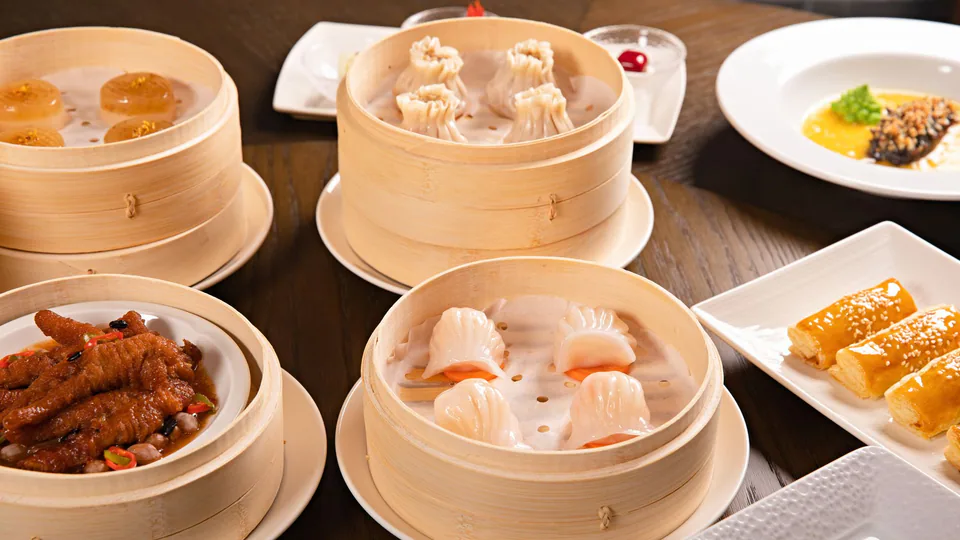
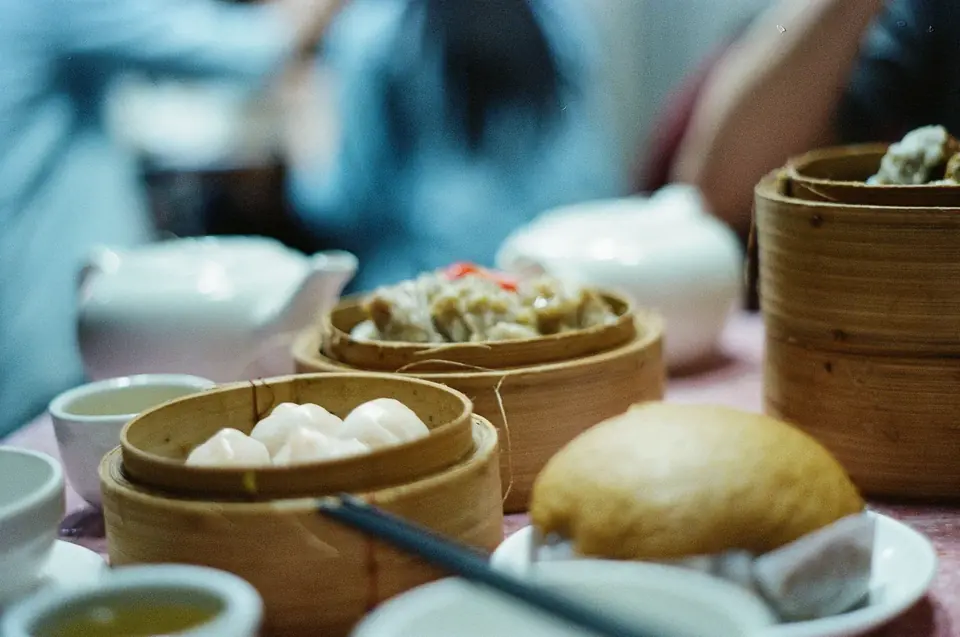
Guangzhou is where you eat dim sum properly — bamboo baskets, tea, and an unhurried morning ritual called yum cha that old-timers stretch across half a day. Beyond that: Cantonese roast goose and char siu, fresh seafood chosen from tanks, double-boiled soups the region treats as medicine, morning congee with fried dough sticks, and wonton noodles in shops that have made nothing else for three generations. The Cantonese saying is that they’ll eat “everything with legs except a table” — approach menus with curiosity and you’ll eat better here than almost anywhere in China.
A simple 1–2 day itinerary
Where to stay
Zhujiang New Town is the modern centre — international hotels, Huacheng Square and the tower view. Liwan/Shamian puts you in the old town among the food streets. During the Canton Fair (April and October), rates across the city double or triple and rooms sell out — book months ahead or stay in Shenzhen and commute by rail.
Getting there & around
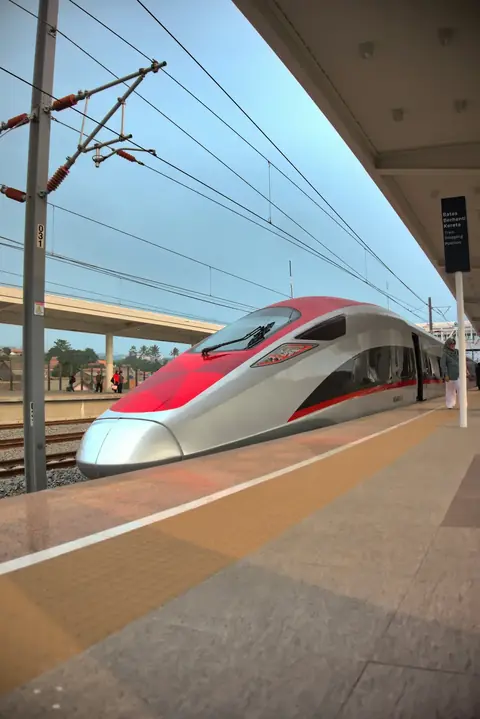
From Shenzhen, high-speed trains run every few minutes and reach Guangzhou South in about 30–40 minutes (metro connects onward); from Hong Kong West Kowloon it’s roughly an hour direct. The metro is huge, cheap and English-signed; Didi works well once your payments are set up. Guangzhou pairs naturally with Shenzhen and Hong Kong on a Greater Bay Area trip.
When to go
Like the rest of the delta: October–December is dry and pleasant, spring is warm and increasingly humid, summer is hot with heavy showers. Food is a year-round reason to come. Note the Canton Fair calendar (mid-April to early May, mid-October to early November) if you want to avoid — or catch — the trade crowds.
Practicalities
Visa: 30-day visa-free entry applies to many nationalities through 31 December 2026 — verify for your passport. Payments: set up Alipay/WeChat Pay before arrival; Guangzhou is as cashless as Shenzhen. Language: the local language is Cantonese, Mandarin is universal, English is thin outside hotels — the usual translation-app rules apply. Business travellers: Guangzhou hosts the Canton Fair each spring and autumn — a very different reason to visit, covered in its own guide.