In this guideShow
Four ways to enter China without a visa
China has opened up quickly since late 2023. Depending on your passport, you may be able to enter under one of four arrangements. They have different rules, so start by finding the one that applies to you.
| Scheme | Who | How long | Key condition |
|---|---|---|---|
| Unilateral visa-free entry | 48 countries (list below) | Up to 30 days per entry | Ordinary passport; valid until 31 Dec 2026 |
| Mutual visa exemption | Countries with a treaty, e.g. Singapore, Thailand, Malaysia, UAE | Usually 30 days | Set by each agreement |
| 240-hour visa-free transit | 57 nationalities incl. USA | Up to 10 days | Onward ticket to a third country or region |
| Hainan visa-free | 59 nationalities incl. USA | Up to 30 days | Hainan Province only |
Hong Kong and Macau are separate: they have their own, generally generous, visa rules. Crossing from Hong Kong or Macau into Shenzhen means entering the mainland, and the schemes above apply at the land border just as they do at an airport.

The 30-day visa-free country list for 2026
On 10 November 2025 China extended its unilateral visa-free policy to 31 December 2026 and added Sweden. The United Kingdom and Canada joined on 17 February 2026. That makes 48 countries on the 30-day list:
| Region | Countries |
|---|---|
| Western Europe | Andorra, Austria, Belgium, France, Germany, Ireland, Italy, Liechtenstein, Luxembourg, Monaco, Netherlands, Portugal, Spain, Switzerland, United Kingdom |
| Northern Europe | Denmark, Estonia, Finland, Iceland, Latvia, Norway, Sweden |
| Central and Southern Europe | Bulgaria, Croatia, Cyprus, Greece, Hungary, Malta, Montenegro, North Macedonia, Poland, Romania, Slovakia, Slovenia |
| Asia and Oceania | Australia, Japan, New Zealand, South Korea |
| Americas | Argentina, Brazil, Canada, Chile, Peru, Uruguay |
| Middle East | Bahrain, Kuwait, Oman, Saudi Arabia |
Russia and Brunei have separate visa-free arrangements with their own conditions and dates. The United States is not on the 30-day list: US citizens need a visa for a normal trip, but they can use 240-hour visa-free transit when flying on to a third country, or the Hainan scheme.
Rules of the 30-day visa-free entry
Official conditions
- Ordinary passports only. Diplomatic and service passports follow other rules.
- Allowed purposes: business, tourism, visiting family or friends, exchange visits and transit.
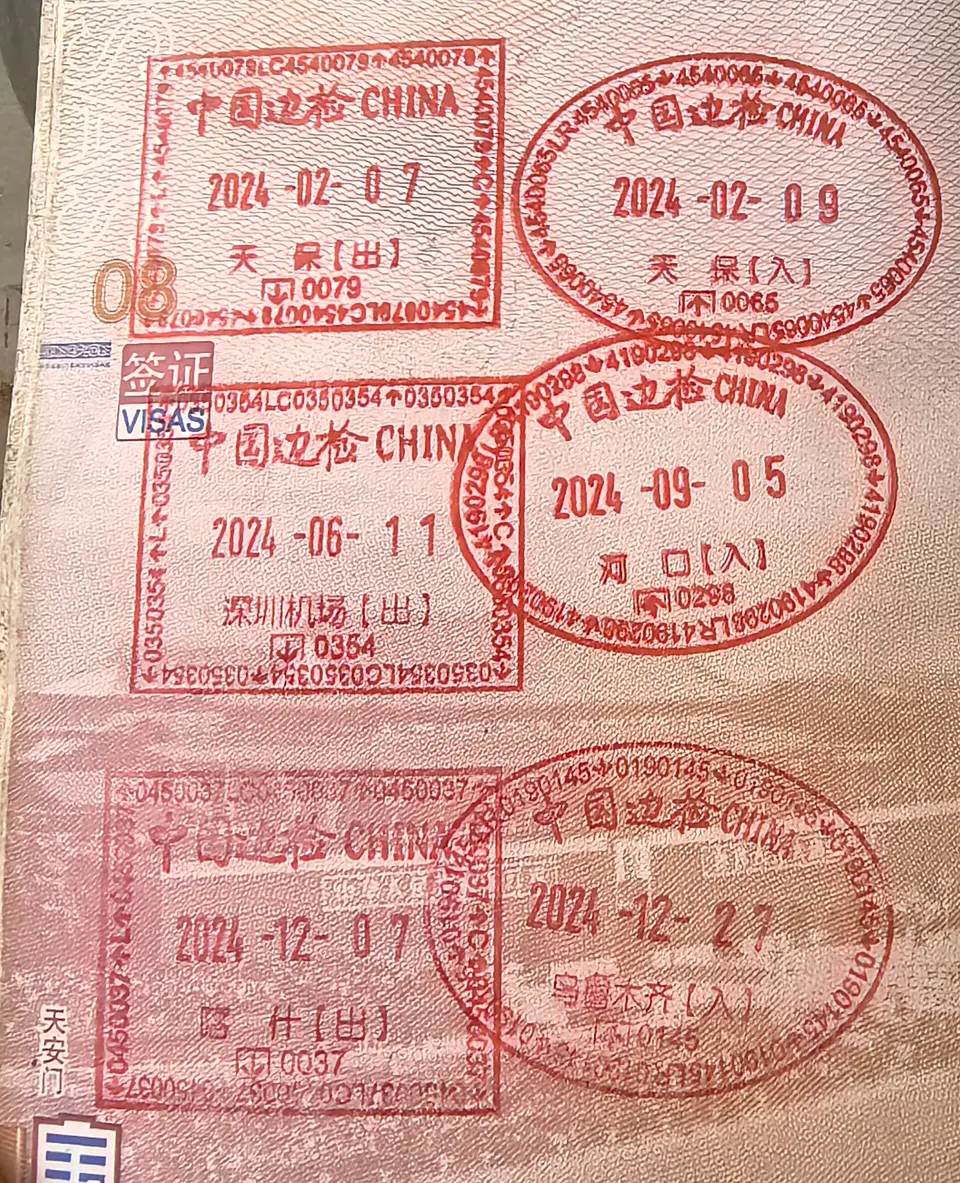
- Maximum 30 days per stay. There is no visa sticker; the entry stamp is your permission.
- Not for work, study or journalism. Those still need the matching visa before you travel.
- Valid for entries until 31 December 2026 unless China announces an extension.
What to have ready at immigration
- A passport with plenty of validity; six months is the safe standard for most airlines.
- Your return or onward ticket. It is not always checked, but officers can ask.
- The address of your first hotel, ideally in Chinese.
- A completed arrival card, either on paper or online where the airport offers it.
Hotels register foreign guests with the police automatically. If you stay in a private home, you must register yourself within 24 hours; the accommodation registration guide explains how.
Will visa-free entry continue in 2027?
As of 19 November 2026, China has not announced whether the 30-day policy will continue after 31 December 2026. The previous extension was announced in early November 2025, less than two months before the old end date, and in March 2026 the Ministry of Commerce and other departments said they planned to expand the list of visa-free countries in an orderly way. An extension is likely, but it is not confirmed.
- Travelling before 31 December 2026: you are covered if your country is on the list.
- Travelling in 2027 with flexible bookings: book, then watch for the announcement.
- Travelling in early 2027 with expensive non-refundable plans: consider applying for a visa, or check whether your route qualifies for 240-hour transit.
We will update this guide when the decision is published.

30-day visa-free entry or 240-hour transit?
People often mix these up. The 30-day entry lets you fly in and out of China from the same country and travel anywhere in the mainland. The 240-hour transit is shorter, requires an onward ticket to a third country or region (Hong Kong and Macau count) and restricts you to the provinces covered by the scheme. If your passport qualifies for the 30-day entry, it is almost always the simpler option.
| 30-day visa-free entry | 240-hour visa-free transit | |
|---|---|---|
| Nationalities | 48 countries | 57 countries, including the USA |
| Maximum stay | 30 days | 240 hours (10 days) |
| Return to the same country | Allowed | Not allowed: onward travel to a third country or region |
| Where you can go | Whole mainland | Permitted provinces only |
| Entry points | Any open port of entry | 65 designated ports |
US citizens and other nationalities not on the list
US citizens can still visit China without a visa in two situations: 240-hour transit with an onward ticket to a third country (for example, flying into Shanghai and out from Hong Kong), or a stay limited to Hainan. For a normal round trip, apply for a tourist (L) visa before you travel. The same applies to most nationalities that are not on either list.
Entering Shenzhen visa-free from Hong Kong or Macau
Many visitors start in Hong Kong and cross into Shenzhen. The 30-day entry works at the land crossings in the same way as at an airport: you show your passport at mainland immigration and receive an entry stamp. Hong Kong is treated as a separate region for 240-hour transit, so a trip such as Europe → Hong Kong → Shenzhen → Bangkok can qualify. A simple Hong Kong → Shenzhen → Hong Kong round trip does not qualify for transit, but it is fine on the 30-day entry.
See the Hong Kong to Shenzhen guide for the crossings themselves.

Checklist before you fly
- Check your nationality against the current list on the Chinese embassy website for your country.
- Make sure your trip ends by 31 December 2026, or watch for the 2027 announcement.
- Carry an ordinary passport with plenty of validity and blank pages.
- Keep your onward or return ticket and first hotel address on your phone.
- Plan no more than 29 nights so you never cut it close to day 30.
- Set up payments and internet before you land; see the China travel checklist.
Sources and how this guide was checked
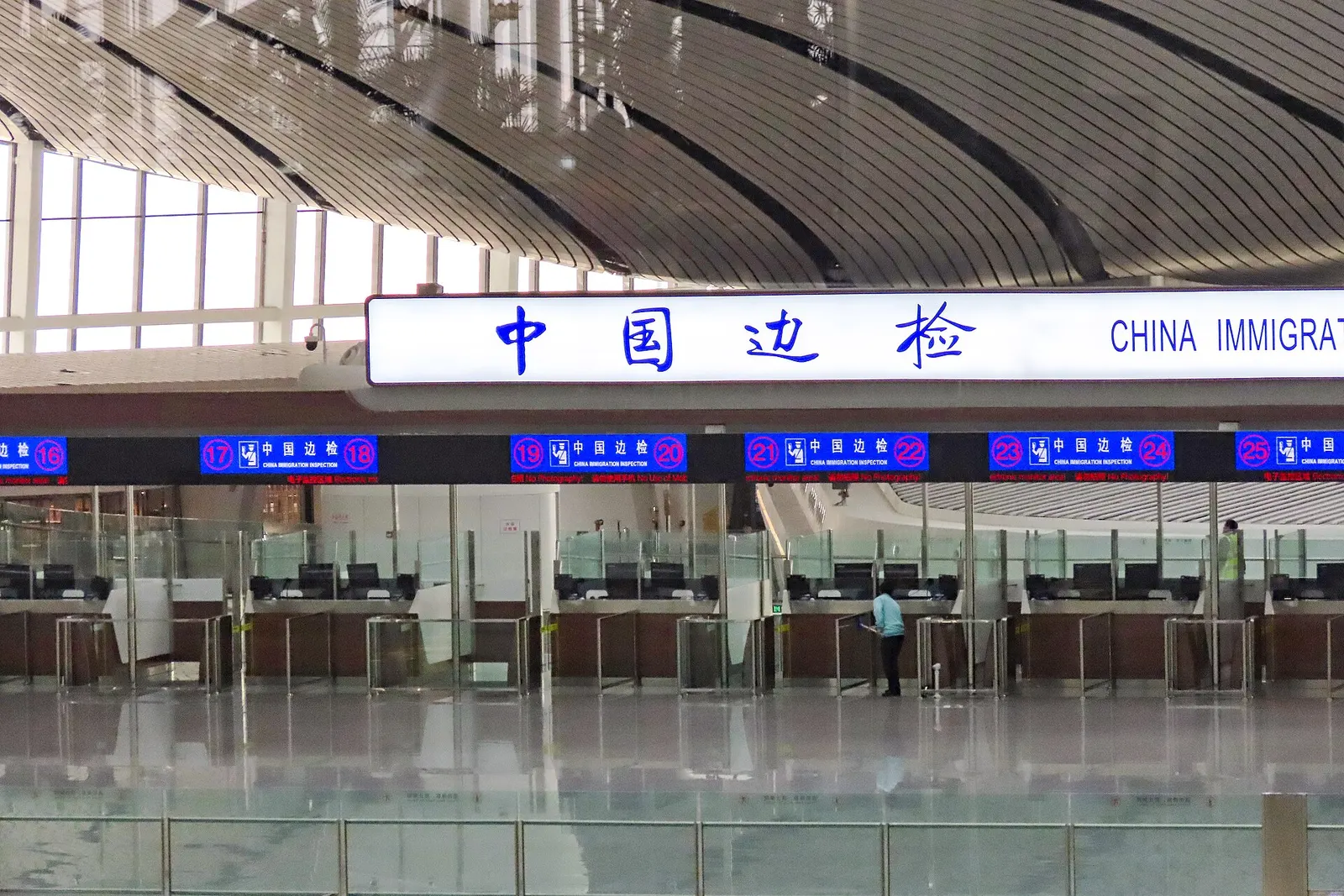
The country list and conditions come from the official Chinese notice of November 2025 and the February 2026 additions, checked against several sources on 19 November 2026. Visa rules can change at short notice: confirm with the Chinese embassy in your country before you book. Lead photo: N509FZ, CC BY-SA 4.0, via Wikimedia Commons.
- Office of the Commissioner of the Chinese Ministry of Foreign Affairs in Hong Kong: extension of the visa-free policy — the official notice of November 2025 with the country list, purposes and 30-day limit.
- China Briefing: China visa-free travel, a complete guide — UK and Canada from 17 February 2026, mutual exemption agreements and the March 2026 measures.
- My China Guide: China visa-free countries 2026 — country list by date added, updated September 2026.
- Baba Goes China: China visa-free 2027 — status of the 2027 extension, checked 16 November 2026.
- National Immigration Administration of China — official entry rules and announcements.
