In this guideShow
What is China’s 240-hour visa-free transit?
The policy lets eligible travellers enter mainland China without obtaining a visa in advance while they are genuinely travelling through the mainland to a different country or region. A successful applicant receives temporary entry permission and may stay in the permitted area for up to 240 hours. Tourism, business visits, exchanges and family visits are allowed. Work, study and journalism that require prior approval still need the appropriate visa.
It is easiest to understand by comparing three different routes:
| Entry option | When it fits | Main condition |
|---|---|---|
| Ordinary visa-free entry | Your passport is covered by a current unilateral or mutual exemption | Follow that exemption’s purpose and stay limit; a third destination may not be required |
| 240-hour visa-free transit | You hold an eligible passport and continue through mainland China to a different country or region | Confirmed A → mainland China → C itinerary, designated port and permitted travel area |
| Chinese visa | Your passport, purpose, duration or route does not fit an exemption | Obtain the correct visa before travel |
Check ordinary visa-free entry first. China has expanded that option to many passports, and it is normally simpler because it does not depend on a transit pattern. The 240-hour policy remains especially useful for travellers whose passport is on the transit list but not on a broader exemption, including many US and Indonesian visitors in 2026.
The six-point eligibility checklist
The National Immigration Administration’s current conditions require all of the following:
- An eligible nationality. The passport you travel on must be from one of the 55 listed countries.
- A valid travel document. The NIA states that the passport or other international travel document must have at least three months of validity.
- Permission for the next destination. You must meet the entry requirements of the country or region after mainland China.
- A confirmed onward journey. Hold an interline ticket with a fixed date and arrangements to a third country or region within the allowed period, or other accepted proof.
- A designated entry port and permitted route. You must apply at one of the 65 ports and remain inside the area allowed by the policy.
- Border approval. Complete the required arrival information, answer the officer’s questions and receive temporary entry permission.
Which 55 passport countries are eligible?
Europe: Albania, Austria, Belarus, Belgium, Bosnia and Herzegovina, Bulgaria, Croatia, Cyprus, Czech Republic, Denmark, Estonia, Finland, France, Germany, Greece, Hungary, Iceland, Ireland, Italy, Latvia, Lithuania, Luxembourg, Malta, Monaco, Montenegro, the Netherlands, North Macedonia, Norway, Poland, Portugal, Romania, Russia, Serbia, Slovakia, Slovenia, Spain, Sweden, Switzerland, Ukraine and the United Kingdom.
Americas: Argentina, Brazil, Canada, Chile, Mexico and the United States. Oceania: Australia and New Zealand. Asia: Brunei, Indonesia, Japan, Qatar, Singapore, South Korea and the United Arab Emirates.
This list can change. Use the NIA page, not an old airline blog or a screenshot, as your final check.
The rule that matters most: A → mainland China → C
Your destination after mainland China must be different from the country or region from which you arrived. Hong Kong, Macao and Taiwan are treated as regions for this policy. The current MTR guide gives Canada → Hong Kong → Shenzhen → Thailand as a valid example.
| Example route | Likely result | Why |
|---|---|---|
| United States → Shenzhen → Hong Kong | Route pattern fits | Hong Kong is a different destination region |
| Hong Kong → Shenzhen → Thailand | Route pattern fits | Arrival and onward regions differ |
| United Kingdom → Shanghai → Japan | Route pattern fits | Japan differs from the inbound country |
| United States → Shenzhen → United States | Does not fit | It is a return trip, not transit to a third destination |
| Hong Kong → Shenzhen → Hong Kong | Does not fit | The same region appears on both sides of the mainland stay |
“Route pattern fits” is not a guarantee of entry. The officer also checks nationality, tickets, passport validity, permitted ports and other circumstances. If the itinerary uses separate bookings, surface transport or a complicated chain of stops, send the exact route to the airline and contact the NIA’s 12367 service before purchase. Do not rely on a booking engine simply labelling the trip a “connection”.
How are the 240 hours calculated?
The NIA says the visa-free period starts at 00:00 on the day after entry. If you enter on 28 July, the count begins at 00:00 on 29 July. A full 240 hours would then run to 24:00 on 7 August. In practice, your temporary entry permit shows the authorised dates, and that permit—not a calculation in a travel blog—is what you must follow.
Book the outward journey with a generous buffer. A cancelled train, typhoon or missed flight does not automatically extend permission. If an emergency or force majeure makes an overstay or travel outside the permitted area unavoidable, contact the local exit-entry administration before the permission expires.
Designated ports and permitted travel areas
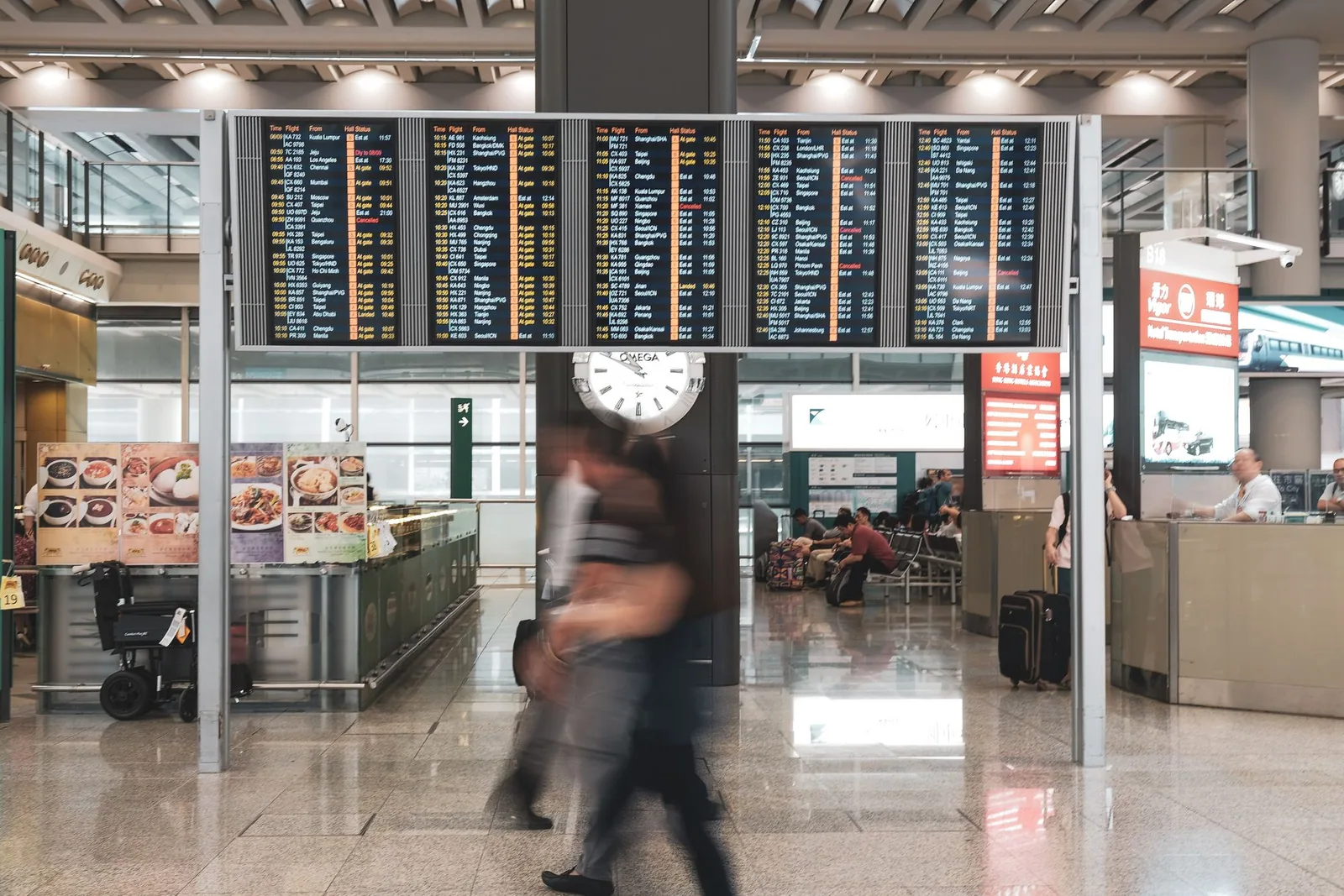
The policy is available through 65 designated entry ports in 24 provincial-level regions. That does not mean every land crossing, ferry terminal or airport can process an application. The official NIA announcement includes the current port-and-area table; check both the entry point and the planned departure point before booking.
Travel is allowed across approved areas rather than being limited to the arrival city. Guangdong is one of the provinces where the whole provincial area is permitted, making a Shenzhen–Guangzhou–Foshan route possible within the authorised stay. Some other provinces are limited to named cities, so never assume that a domestic train ticket automatically makes a place permitted.
What to prepare and what happens on arrival
Before departure
- Check whether ordinary visa-free entry already covers your passport and purpose.
- Confirm all six transit conditions and the exact permitted port and travel area.
- Save the onward ticket showing passenger name, date, fixed journey and destination. Carry an offline copy.
- Save hotel confirmations and the first address in Chinese and English.
- Carry proof that you may enter the next destination, including a visa if one is required.
- Complete the free arrival card through the official NIA channel if convenient, or use the available arrival process at the port.
Since 20 November 2025, foreigners can submit arrival information online. The service is free. The NIA has warned about fake websites charging travellers, so use only the official NIA arrival-card website, its named government apps or the facilities at the port. Paper arrival cards remain available.
At the airline desk and border
If check-in staff ask for a Chinese visa, clearly say that you intend to apply for the “240-hour visa-free transit policy” and show the onward booking. Arrive early because the carrier may need to verify eligibility. On arrival, follow signs or ask for the visa-free transit/temporary entry desk, present the documents and answer questions about your route and stay.
After approval, inspect the dates on the temporary entry permit before leaving the counter. A hotel normally completes accommodation registration for guests. If you stay in a private home or another non-hotel property, you or the host must register with the local police within 24 hours of check-in.
Using the policy for Shenzhen and Hong Kong
For a Shenzhen-focused trip, three useful designated entry points are Shenzhen Bao’an International Airport, Shekou passenger port and Hong Kong West Kowloon Station. West Kowloon was added as an entry port on 5 November 2025, which made a rail arrival from Hong Kong far more practical for eligible transit travellers. The official MTR guidance also confirms that Hong Kong, Macao and Taiwan can count as onward regions.
These examples show the planning logic:
- US → Shenzhen Bao’an → Hong Kong: a simple air-to-region transit pattern, assuming the ticket, passport and other conditions fit.
- Hong Kong → West Kowloon border processing → Shenzhen → Thailand: a rail entry followed by onward travel to a different country.
- Hong Kong → Shekou ferry → Shenzhen → Macao: potentially valid because Macao is a different region, but verify the specific ferry and departure port before purchase.
- Hong Kong → Shenzhen → Hong Kong: not a third-destination transit. Use ordinary visa-free entry or a visa if your passport qualifies, not this policy.
Once admitted, the Shenzhen travel guide helps build the city plan. For a train departure, read the China high-speed train guide; for the border itself, compare options in the Hong Kong to Shenzhen guide.

Seven mistakes that can break the plan
- Treating transit like a 10-day tourist exemption. The route must continue to a different country or region.
- Booking A → China → A. A round trip does not meet the third-destination rule.
- Using an old port list. Ports have been added, but not every crossing is eligible.
- Ignoring the permitted area. Some provincial regions allow only named cities.
- Showing an unconfirmed onward plan. Hold a dated, confirmed booking and the documents required for the next destination.
- Counting from the wrong time. Follow the dates printed on the temporary entry permit.
- Paying for a fake arrival card. Official online submission is free, and paper/on-site options remain available.
A final pre-booking test
Write the trip on one line: last place before mainland China → mainland entry port → cities visited → mainland departure port → next country or region. Then check the passport list, three-month validity, confirmed onward ticket, designated ports and permitted areas against the NIA source. If any box is unclear, pause before buying a non-refundable ticket and ask the airline plus NIA 12367 about the exact itinerary.
Finally, prepare the practical side of the stay: use the first-time China checklist, set up Alipay and WeChat Pay, and arrange a China eSIM or internet backup.