In this guideShow
Chinese New Year 2027: the date is fixed, the mainland holiday is not yet
The first day of the lunar new year falls on Saturday 6 February 2027, the start of the Year of the Goat. The Hong Kong Observatory calendar and Hong Kong’s list of 2027 holidays both confirm it. Use it as the anchor for flights and hotels, not as a finished plan for every day of the trip.
Do not confuse the festival date with mainland China’s official days off. The State Council announces those separately, usually with weekend working days swapped in. In 2026 the Spring Festival break ran for nine days, 15–23 February, but that is no promise for 2027. As of 4 November 2026 the official 2027 schedule for the mainland had not been published. When it appears, adjust your bookings and allow for possible working Saturdays.
What chunyun is and why it affects visitors
Chunyun is the roughly 40-day Spring Festival travel season. It is not one celebration in a square but a period when people travel home to their families and then back to the cities where they work or study. That is why trains and airports are busy well before and after New Year’s Day, not only in tourist hotspots.
The scale is real. China’s Ministry of Transport expected a record 9.5 billion inter-regional trips during the 2026 season, which ran from 2 February to 13 March; the busiest single day, 20 February, saw almost 353 million trips. The National Immigration Administration recorded 17.8 million border crossings over the nine-day holiday, peaking at 2.26 million on 21 February. These are not forecasts for 2027, but they are a good reason not to leave transport to the last evening.
For visitors this means three things:
- Less flexibility with high-speed trains and domestic flights.
- Longer transfers even when transport runs normally: platforms, security checks and taxi queues take more time.
- Uneven opening: the metro keeps running, but a small family restaurant may close because its team has gone home.
When to go: choose the experience, not a random date
If you mainly want sights, smooth transfers and an easy first visit, travel outside the holiday window. You get predictable opening hours and simpler train planning. If you want lanterns, New Year fairs, red decorations and local atmosphere, the festival is worth it — just cut the number of cities.
- First time in China: fly into one big city, stay three to five nights and make at most one short transfer. Do not try Beijing, Xi’an and Shanghai in six days.
- You want the festive atmosphere: stay central in a large city, plan one confirmed activity a day and keep the rest flexible. Follow parades and temple fairs only from the city’s own programme.
- Visiting family or work: book arrival and departure with a buffer and never make the last day an international connection through another province.
Do not plan around the stereotype that “all of China is closed”. Services run unevenly: hotels, airports and city transport operate; museums, attractions, small restaurants and event programmes need their own check.
Transport, hotels and bookings: what to do as soon as you have dates
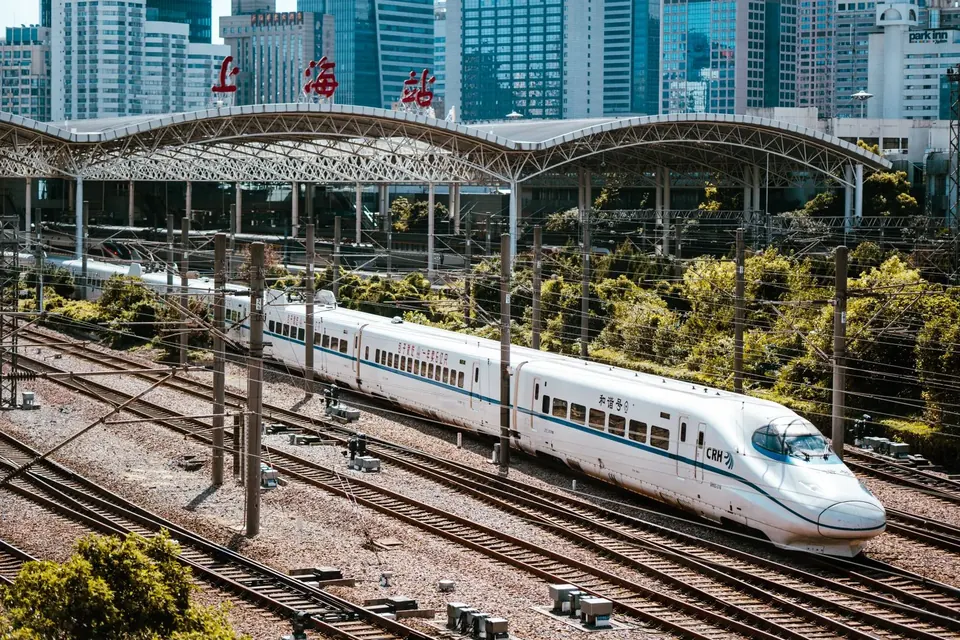
Start with the route, not individual tickets. Choose your arrival city, the first two nights and a realistic day for the first transfer. Only then add a high-speed train or domestic flight. Check the exact station: big cities have several, and “South”, “West” or “East” is not a detail. The full process is in the China high-speed train guide.
Follow each operator’s sales rules. If your train is not on sale yet, set a reminder and keep your passport details ready; do not build the plan on the hope of five later services. On flights, allow far more than the usual minimum connection time — two hours that look generous on a quiet day disappear quickly with baggage and terminal changes.
Book the arrival hotel and the last night first. Choose a hotel that explicitly accepts foreign guests, keep its name and address in Chinese and have your passport ready for registration at check-in — see accommodation registration in China.

What works in the cities during the holiday
Set up the digital basics before you need them. Mobile data helps with QR menus, translation and finding what is open — see the China eSIM guide. Set up Alipay or WeChat Pay before the holiday and keep a second way to pay; the Alipay and WeChat Pay guide explains why one card is not a plan.
Restaurants follow no single rule. Shopping malls and larger chains are usually the safer choice, though not every branch opens. If you have an allergy or a strict diet, do not improvise during the festival: keep a Chinese sentence on your phone, a backup meal and check ingredients.
Treat celebrations as a bonus, not a fixed show. Cities organise public decorations, temple fairs and lantern events, but dates, tickets and safety rules are local. Look for the organiser’s current page; if the programme is not confirmed, do not make it the main reason for the trip.
Hong Kong, Macau and the border: same festival, different logistics
Hong Kong and Macau can be part of a great festival trip, especially if you want city life, food and an easier English-speaking environment. They are not just another province: they have their own entry rules, their own public holidays and separate border controls. Hong Kong’s 2027 holidays are 6 February (Lunar New Year’s Day), 8 February and 9 February, because the second day falls on a Sunday. Do not use that as the mainland calendar.
When crossing between Shenzhen, Hong Kong and Macau, give the crossing its own block of the day. Check your passport, entry conditions, the last connection and the hotel address on the other side. With crossings at record levels during the 2026 holiday, never plan the border as a 15-minute gap between two bookings. For a ready route, see how to cross from Hong Kong to Shenzhen.
Checklist and a plan B you will actually use
- Note 6 February 2027, but confirm mainland days off only from the State Council notice.
- Secure arrival, two nights and departure first. Build the rest of the route afterwards.
- Add a time buffer to every important transfer and never chain another critical transfer onto it.
- Save addresses, passport details and hotel names in Chinese offline.
- Carry two payment methods and working mobile data.
- Check each key attraction’s opening the day before — not last year’s timetable.
- Plan B: if a train is cancelled, stay a night longer; if a restaurant is closed, use a mall or hotel restaurant; if an attraction is full, walk a free district or park.
Chinese New Year is not a reason to cancel a trip. It is a reason to move less, book earlier and never let one unchecked opening time decide the whole day.
Sources and how this guide was checked
Checked on 4 November 2026. When the State Council publishes the 2027 holiday schedule, this guide will be updated with the exact days off.
- Hong Kong Observatory: 2027 Gregorian–lunar calendar — the first day of the first lunar month is 6 February 2027.
- Hong Kong Labour Department: statutory holidays 2027 — 6, 8 and 9 February 2027.
- State Council: 2026 Spring Festival travel rush — 40-day season, 9.5 billion expected trips, 20 February peak.
- National Immigration Administration: 2026 holiday border crossings — 17.8 million crossings, 2.26 million on the peak day.
